I really should have written this, like, three weeks ago when we saw the movie. I wasn't especially affected by this movie...it's not fresh..I'm trying.
Revolutionary Road!!
I think the only reason I wanted to go see this movie is because I wanted to be at the movies. That and how beautiful Kate Winslet looked in the advertisements.
Were we supossed to feel bad for Leo? Ever? Because I didn't. Why does the man cheat in ever movie ever? And in Mad Men? As soon as it starts you know - he is going to cheat. Even at the end, not much sympathy for him. I mean, it's sad. You feel bad for the situation. But I wasn't crying at all, which is saying something.
I kept thinking "When/how is this movie going to end? What time is it? Why is this happening?".
Winslet's character was so sad. She was bound by her times, couldn't really make her own decisions, she was stuck. But why did they have to make her so manic? I mean, really?
Um, i just remembered this - the neighbor's insane son "speaking the truth" but he's CRAZY. How does he know!? That was stupid.
KW's bouncing ponytail was the best part. Hands down.
I mean, maybe it was probably a good book. My boss said it was. I don't have much to say.
Over acting. Seriously POINTING FINGERS in fights. that was there.
I can't even go into the abortion stuff.
It had been described as Mad Men-esque. Well, you should probably just watch Mad Men instead - it's good. I watched it pretty much all weekend. Deep into season 1.
Anyway, what Megan said!
Showing posts with label major bummer. Show all posts
Showing posts with label major bummer. Show all posts
Tuesday, February 24, 2009

Monday, February 23, 2009
***Spoiler Alert***That’s it-she dies from a self-induced abortion?! WTF?
Two nights ago Jen and I went to see “Revolutionary Road”. Originally I had no interest in seeing this film. I made fun of it over and over again, complaining that the trailers gave absolutely no information as to what the movie was about. But then I watched part of it over the shoulder (with no sound) of someone on the MetroNorth train to New Haven the weekend I went home for my birthday and I was intrigued. It was the bar scene and Kate Winslet’s bouncy ponytail looked so appealing, bouncing around on her back and shoulders as she sexily danced with her neighbor in the red light. And low and behold, Kate Winslet and her bouncy ponytail won the Golden Globe* for best actress and then the commercials started to reveal more dialogue/plot line. Ooo, I just had to see this film!
I had high hopes that this film would turn out to be a sleeper hit, a hidden gem. My hopes were dashed. I could not really tell what the point of this movie was except maybe to make women look like miserable nags or loonies, or maybe to illustrate the point that everyone was miserable in the marriages in the 1950s as evidenced by Kathy Bates’ husband turning down his hearing aid to effectively tune her out at the movie’s end. I guess it was a meditation on the psychoses of the era: the not so distant memories of the war, the nuclear familes, the suburbanization, the keeping up with the Joneses, the sameness of the jauntily suit-and-hatted men stepping off the commuter trains pouring into Grand Central from Connecticut and New Jersey to file off to their jobs in marketing and advertising, and the lunch time highballs. The relationship between Leonardo DiCaprio, as Frank Wheeler, and Winslet, as April, didn’t seem all that different than my grandparents’ unhappy marriages. Their marriages ended just as tragically, in the particular way that tragedy struck those relationships that approached what should have been their golden hour in the mid-50s.
Winslet’s April was so sad. She was sad in the way that a woman who was bound by her times is sad. Unable to reasonably leave her husband, most likely unable to be gainfully employed in anything other than the secretarial sector, if that, unable to access birth control, and unable to terminate a pregnancy without risking death herself. She was trapped. And when she tried to express her unhappiness and raised her voice about the lack of love in her married life, she was made to look like a fucking madwoman. A woman can only be one of two things: a nag or a crazy. Wait, she can be a bitch too. A bitch, a nag, or a crazy. Lots of possibilities here! Lots of ‘em!!! Also, when her character went as far as to “be bad” and she ended up doing it to her married neighbor in his car, it was made to seem as an act of revenge for her husband’s philandering and that it was a physically uncomfortable and regrettable act that made her feel ashamed afterward. In fact, whenever there was a sex scene in the film Winslet’s character did not seem especially emotionally present or sexually satisfied.
There was one point toward the end of the film that I had no idea where the plot was going and it made me so nervous. I kept wringing my hands and, turning to Jen, whispered, “What is going to happen?” I was pretty sure either Leo or Kate was going to kill the other –or- Kate was going to kill herself –or- Kate was going to run away with the kids who were almost never in the scene, anyway. For a stay-at-home 1950s housewife, Kate’s character did very little mothering. In any event, the ending of Revolutionary Road was not all together unexpected but not entirely predictable either. This movie was not very interesting, yet still pretty sad.
Luckily I made it home in time to watch Lost!
*What are the Golden Globes all about? It is the award show warm up to the award show season and the prizes are decided upon by the Hollywood foreign press…what does that even mean? Who is the Hollywood foreign press anyway? Like, the actual foreign press?
I had high hopes that this film would turn out to be a sleeper hit, a hidden gem. My hopes were dashed. I could not really tell what the point of this movie was except maybe to make women look like miserable nags or loonies, or maybe to illustrate the point that everyone was miserable in the marriages in the 1950s as evidenced by Kathy Bates’ husband turning down his hearing aid to effectively tune her out at the movie’s end. I guess it was a meditation on the psychoses of the era: the not so distant memories of the war, the nuclear familes, the suburbanization, the keeping up with the Joneses, the sameness of the jauntily suit-and-hatted men stepping off the commuter trains pouring into Grand Central from Connecticut and New Jersey to file off to their jobs in marketing and advertising, and the lunch time highballs. The relationship between Leonardo DiCaprio, as Frank Wheeler, and Winslet, as April, didn’t seem all that different than my grandparents’ unhappy marriages. Their marriages ended just as tragically, in the particular way that tragedy struck those relationships that approached what should have been their golden hour in the mid-50s.
Winslet’s April was so sad. She was sad in the way that a woman who was bound by her times is sad. Unable to reasonably leave her husband, most likely unable to be gainfully employed in anything other than the secretarial sector, if that, unable to access birth control, and unable to terminate a pregnancy without risking death herself. She was trapped. And when she tried to express her unhappiness and raised her voice about the lack of love in her married life, she was made to look like a fucking madwoman. A woman can only be one of two things: a nag or a crazy. Wait, she can be a bitch too. A bitch, a nag, or a crazy. Lots of possibilities here! Lots of ‘em!!! Also, when her character went as far as to “be bad” and she ended up doing it to her married neighbor in his car, it was made to seem as an act of revenge for her husband’s philandering and that it was a physically uncomfortable and regrettable act that made her feel ashamed afterward. In fact, whenever there was a sex scene in the film Winslet’s character did not seem especially emotionally present or sexually satisfied.
There was one point toward the end of the film that I had no idea where the plot was going and it made me so nervous. I kept wringing my hands and, turning to Jen, whispered, “What is going to happen?” I was pretty sure either Leo or Kate was going to kill the other –or- Kate was going to kill herself –or- Kate was going to run away with the kids who were almost never in the scene, anyway. For a stay-at-home 1950s housewife, Kate’s character did very little mothering. In any event, the ending of Revolutionary Road was not all together unexpected but not entirely predictable either. This movie was not very interesting, yet still pretty sad.
Luckily I made it home in time to watch Lost!
*What are the Golden Globes all about? It is the award show warm up to the award show season and the prizes are decided upon by the Hollywood foreign press…what does that even mean? Who is the Hollywood foreign press anyway? Like, the actual foreign press?
Wednesday, February 11, 2009
Ted, not Sylvia
Sylvia, the movie, sucked. Listen hear, babies, and listen good. The downlow on John Brownlow, the dude responsible for the screenplay, is that he's definitely not a feminist and he was definitely not savy to the life & times of Ms Plath when writing that bullplop.
Plath, as played by Gwyneth Paltrow (whose taste I'm starting to question), is portrayed as a completely pathetic, sad sack of a woman who totally went nuts and offed herself after suspecting, then confirming, her husband's dalliances. Little mention of her history of mental illness, her artistic struggles, the fact that her husband roughed her up and apparently destroyed her journals postmortem so that no one would know the half of it. Woops, just forgot, whatevs.
Part of the problem, in my opinion, is that the story just drops you in her Cambridge years so there is so much neglected subtext. And almost immediately we find Sylvia at a party where she falls all over Ted Hughes after gushing on about how great his poetry is. I don't doubt there was some steamy hot passion there with a dash of sublime appreciation and career envy to boot, but I also don't think Sylvia would be so transparent and uncomplicated. Not that I knew the broad personally, but her writing evokes some depth, so why would her character be so shallow? Touched, she was, but I doubt Plath was petty.
Not to mention that Gwyneth, as Sylvia, is all rosy and refined for the first half of the movie, dressed entirely in pink and pearls, hair smooth and curled, lips glossed, and consequently, as she goes crazy, her hair gets long and fried like a poodle and she starts wearing entirely drab earth tones and looking sallow. The visual metaphor is perhaps a little too obvious.
However, there is some nice use of slow-mo in this film.
Also, I must add that Ted Hughs is played by Daniel Craig. I've been pretty indifferent to Craig, but in a recent conversation, when asked what I think about him I decided that I think he is handsome and a good actor and all that, but there is something so BRUTAL about him. Like, he looks like he would be pretty nastymean IRL.
I vote that Jen May remake Ted, I mean Sylvia. As long as she uses the slow-mo.
Plath, as played by Gwyneth Paltrow (whose taste I'm starting to question), is portrayed as a completely pathetic, sad sack of a woman who totally went nuts and offed herself after suspecting, then confirming, her husband's dalliances. Little mention of her history of mental illness, her artistic struggles, the fact that her husband roughed her up and apparently destroyed her journals postmortem so that no one would know the half of it. Woops, just forgot, whatevs.
Part of the problem, in my opinion, is that the story just drops you in her Cambridge years so there is so much neglected subtext. And almost immediately we find Sylvia at a party where she falls all over Ted Hughes after gushing on about how great his poetry is. I don't doubt there was some steamy hot passion there with a dash of sublime appreciation and career envy to boot, but I also don't think Sylvia would be so transparent and uncomplicated. Not that I knew the broad personally, but her writing evokes some depth, so why would her character be so shallow? Touched, she was, but I doubt Plath was petty.
Not to mention that Gwyneth, as Sylvia, is all rosy and refined for the first half of the movie, dressed entirely in pink and pearls, hair smooth and curled, lips glossed, and consequently, as she goes crazy, her hair gets long and fried like a poodle and she starts wearing entirely drab earth tones and looking sallow. The visual metaphor is perhaps a little too obvious.
However, there is some nice use of slow-mo in this film.
Also, I must add that Ted Hughs is played by Daniel Craig. I've been pretty indifferent to Craig, but in a recent conversation, when asked what I think about him I decided that I think he is handsome and a good actor and all that, but there is something so BRUTAL about him. Like, he looks like he would be pretty nastymean IRL.
I vote that Jen May remake Ted, I mean Sylvia. As long as she uses the slow-mo.
Monday, February 9, 2009
Vicky Christina Barcelona otherwise known as Woody Allen's Dreams of Threesomes
Last week Jen and I went to see Woody Allen's new film, Vicky Christina Barcelona.
Wow.
Woody Allen is a fucking pervert jerk and I hate him.
I don't even know where to begin. How about this...there were several moments towards the end of the film where I was leaning into Jen's ear whisperning, "Are you serious???" or mouthing "This movie suxxxx" repeatedly.
Walking home from BAM, I had to reproach myself. Was it really as terrible as it felt while I was stuck in my theater seat? No, probably not. I mean, I get it. Woody Allen is typically existential, kind of posing the preposterousness of human condition and the things we do/the situations we create for ourselves or find ourselves in. Like, to quote D. Higgs, "love is love" and it's love whether it's a ménage à trois or a commitment in the form of a legalized, institutionalized marriage, what have you. It's what you make it, whatever you choose to commit yourself to, because what is a relationship except a promise that you uphold, a commitment that you make, over and over again?
But, underlying that, I feel like Allen is a woman-hater, or rather, such a woman-lover, a womanizer, if you will, that his female characters always come off as cheap, petty, insane and inane, the kind of yesterday's papers that are easy to forget and dismiss.
Overall, Vicky Christina Barcelona basically felt like a playground for Woody Allen to live out his "two girls for every guy" fantasies and gape at Scarlett Johansson's stupid pouty lips and big hoots.

UGH.
I have something to tell you, Woody Allen, girl CAN NOT act. Why does she carry so much cred? Don't understand, never will. Her role fell absolutely flat, just killed it, made the whole god damn movie so painful to watch.
And poor Rebecca Hall, casted basically to fill the role of Scarlett's wet blanket, brunette lookalike. The old adage is true, according to VCB; Blondes do have more fun.
Javier Bardem and Penelope Cruz were a pleasure to watch. I agree with Jen's observation that Cruz proves better when acting in Spanish as opposed to English, but she is just so mesmerizingly beautiful. Call me out on my double standard, I don't care.
I think my chief complaint, however, is the blatant overuse of linen in the costuming. Really? Do people really wear linen around the clock in España? I'm all for easy breazy comfort, and I can only imagine how hot summer can be in Barçe, but need every character in VCB look like they are walking around in potato sacks?

I rest my case.
Wow.
Woody Allen is a fucking pervert jerk and I hate him.
I don't even know where to begin. How about this...there were several moments towards the end of the film where I was leaning into Jen's ear whisperning, "Are you serious???" or mouthing "This movie suxxxx" repeatedly.
Walking home from BAM, I had to reproach myself. Was it really as terrible as it felt while I was stuck in my theater seat? No, probably not. I mean, I get it. Woody Allen is typically existential, kind of posing the preposterousness of human condition and the things we do/the situations we create for ourselves or find ourselves in. Like, to quote D. Higgs, "love is love" and it's love whether it's a ménage à trois or a commitment in the form of a legalized, institutionalized marriage, what have you. It's what you make it, whatever you choose to commit yourself to, because what is a relationship except a promise that you uphold, a commitment that you make, over and over again?
But, underlying that, I feel like Allen is a woman-hater, or rather, such a woman-lover, a womanizer, if you will, that his female characters always come off as cheap, petty, insane and inane, the kind of yesterday's papers that are easy to forget and dismiss.
Overall, Vicky Christina Barcelona basically felt like a playground for Woody Allen to live out his "two girls for every guy" fantasies and gape at Scarlett Johansson's stupid pouty lips and big hoots.

UGH.
I have something to tell you, Woody Allen, girl CAN NOT act. Why does she carry so much cred? Don't understand, never will. Her role fell absolutely flat, just killed it, made the whole god damn movie so painful to watch.
And poor Rebecca Hall, casted basically to fill the role of Scarlett's wet blanket, brunette lookalike. The old adage is true, according to VCB; Blondes do have more fun.
Javier Bardem and Penelope Cruz were a pleasure to watch. I agree with Jen's observation that Cruz proves better when acting in Spanish as opposed to English, but she is just so mesmerizingly beautiful. Call me out on my double standard, I don't care.
I think my chief complaint, however, is the blatant overuse of linen in the costuming. Really? Do people really wear linen around the clock in España? I'm all for easy breazy comfort, and I can only imagine how hot summer can be in Barçe, but need every character in VCB look like they are walking around in potato sacks?
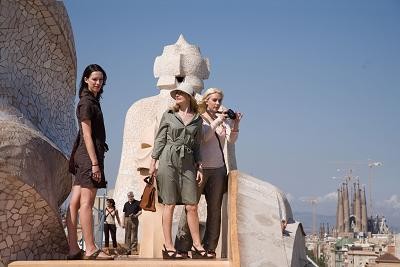
I rest my case.
Subscribe to:
Posts (Atom)